






The Ultimate Fiber Laser Cutting Machine Guide
1. What is a Fiber Laser Cutting Machine?
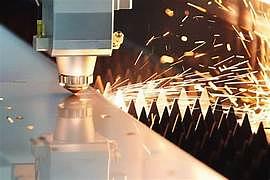
A fiber laser uses a solid-state laser source where the active gain medium is an optical fiber doped with rare-earth elements (like ytterbium). The laser beam is generated and delivered through a flexible fiber optic cable, making it highly efficient for cutting metals.
Key Components:
· Fiber Laser Source (Heart of the machine)
· Cutting Head with focusing lens and nozzle
· Motion System (Gantry or robotic arm)
· CNC Controller (usually Siemens, Fanuc, or Raycus)
· Chiller System (critical for cooling)
· Fume Extraction and dust collection
· Automatic Material Handling (optional)
2. Fiber Laser vs. CO2 Laser: Key Differences
Aspect Fiber Laser CO2 Laser
Best For Metals only (steel, aluminum, brass, copper) Non-metals (wood, acrylic, leather, plastic)
Wavelength 1.06 μm (absorbed well by metals) 10.6 μm (absorbed by non-metals)
Electrical Efficiency 30-50% (Very efficient) 10-15% (Less efficient)
Maintenance Minimal (no mirrors, no laser gas) Regular (mirror alignment, gas replacement)
Cutting Speed 3-5x faster on thin metals Slower on metals
Operating Cost Lower (less power, no consumable gases) Higher (more power, gas consumables)
Initial Cost Higher for same power Lower for same power
Simple Rule: Fiber = Metals | CO2 = Non-Metals
3. Types of Fiber Laser Cutters
A. By Power & Capability:
Power Range Material Thickness Primary Applications
500W-1kW Up to 6mm mild steel Sheet metal, signage, jewelry, thin plates
1.5kW-3kW Up to 12-16mm mild steel General fabrication, machinery parts
4kW-6kW Up to 20-25mm mild steel Industrial manufacturing, structural steel
8kW-12kW+ 25mm+ mild steel Heavy industry, shipbuilding, thick plates
B. By Machine Configuration:
1. Flatbed Sheet Laser
· Most common type
· Fixed bed, moving cutting head (gantry system)
· Sizes: 1500x3000mm (standard), up to 4000x20000mm
2. Fiber Laser Tube Cutter
· Specialized for cutting pipes, tubes, profiles
· Rotating chucks hold and spin material
· Cuts round, square, rectangular tubes
3. 3D Fiber Laser
· Robotic arm with laser head
· Cuts complex 3D shapes (automotive, aerospace)
· Very high-end and expensive
4. Fiber Laser Marker/Engraver
· Low power (20W-100W)
· For marking serial numbers, logos, barcodes
· Small work area, high precision
4. What Materials Can It Cut?
Excellent Results:
· Mild Steel (Best material for fiber lasers)
· Stainless Steel
· Aluminum (needs higher power than steel)
· Brass & Copper (reflective, requires special settings)
· Titanium
· Galvanized Steel
Cannot Cut:
· Wood
· Acrylic/Plexiglass (will burn, not melt cleanly)
· Glass
· Stone
· Leather, Fabric, Paper
5. Critical Technical Specifications to Evaluate
A. Laser Source Brand (Most Important!)
Tier 1 (Best):
· IPG Photonics (Germany/USA) - Gold standard, most reliable
· nLIGHT (USA) - High performance
· Coherent (USA/Germany) - Excellent quality
Tier 2 (Good Value):
· Raycus (China) - Most popular mid-range
· Max Photonics (China) - Good quality
· JPT (China) - Reliable performance
Tier 3 (Budget):
· Many Chinese brands - Variable quality, check warranty
B. Motion System
· Linear Guides: HIWIN or THK (brand matters)
· Servo Motors: Yaskawa, Panasonic, or Delta
· Rack & Pinion: Better than belt drives for heavy cutting
C. CNC Controller
· Siemens 840D (Premium industrial)
· Fanuc (Excellent reliability)
· PA8000 (Common in Chinese machines)
· Raycus (OEM versions)
D. Cutting Head
· Precitec or W (German - best quality)
· Raytools (Swiss - excellent)
· Chinese brands (variable quality)
E. Chiller
· Air-cooled: Up to 4kW lasers
· Water-cooled: Essential for 4kW+ lasers
· Brands: S&A, Teyu, Filtermist
6. The Complete Buying Checklist
Before You Contact Suppliers:
1. Material Analysis:
· What metals will you cut? (% of each)
· Maximum thickness needed?
· Maximum sheet size?
2. Production Requirements:
· Shifts per day? (1, 2, or 3 shifts)
· Tolerance requirements?
· Cutting speed expectations?
· Need for automation?
3. Budget & ROI:
· Initial budget?
· Expected monthly operating cost?
· Required payback period?
When Evaluating Machines:
✅ MUST-HAVE Features:
· Auto Focus Cutting Head (capacitive height control)
· Automatic Nozzle Changer (for different thicknesses)
· Collision Protection (saves the cutting head)
· Pierce Detection (ensures clean starts)
· IPG, Raycus, or JPT laser source (avoid unknown brands)
· HIWIN or THK linear guides
· Good chiller included (not an afterthought)
· Fume extractor included
⚠️ WATCH OUT FOR:
· "Free" installation that's actually minimal
· Too-good-to-be-true pricing (usually means poor components)
· Vague warranty terms
· No local service technicians
· Pressure to buy immediately
7. Sample Configuration for Different Needs
Small Workshop (Startup)
· Power: 1kW-1.5kW fiber laser
· Bed Size: 1500x3000mm
· Source: Raycus or JPT
· Budget: RM 250,000 - RM 350,000
· Best For: Signage, decorative metal, prototypes
Medium Fabrication Shop
· Power: 3kW fiber laser
· Bed Size: 2000x4000mm
· Source: IPG or Raycus
· Features: Auto nozzle change, material loading
· Budget: RM 450,000 - RM 650,000
· Best For: General fabrication, machinery parts
Industrial Manufacturer
· Power: 6kW-8kW fiber laser
· Bed Size: 3000x6000mm
· Source: IPG or nLIGHT
· Features: Pallet changer, full automation
· Budget: RM 800,000 - RM 1.5M+
· Best For: High-volume production, thick plates
8. Operating Costs Breakdown
Monthly Expenses (Estimate for 3kW machine):
· Electricity: RM 2,000-3,000 (3 shifts)
· Assist Gas:
· Nitrogen: RM 4,000-8,000 (for stainless)
· Oxygen: RM 1,000-2,000 (for mild steel)
· Consumables: RM 1,000-2,000 (nozzles, lenses)
· Maintenance: RM 1,000-2,000 (service contract)
· Labor: RM 3,000-5,000 (operator)
Total Monthly: RM 11,000-20,000
9. Leading Suppliers in Malaysia
Premium/Industrial:
1. Bystronic (Swiss) - Top tier, excellent precision
2. Trumpf (German) - Industry leader, very expensive
3. Mazak (Japanese) - Excellent quality
Mid-Range/Value:
1. HSG Laser (China) - Good value, popular
2. Bodor Laser (China) - Competitive pricing
3. ADH Laser (China) - Growing presence
Local Experts/Integrators:
1. Laser Pro Asia - Strong after-sales support
2. Superwin Laser Tech - Technical expertise
3. Spectra Laser - Wide range of options
Budget/Entry-Level:
1. Many Chinese brands via Alibaba - Caution: Service risks
· Always visit factory, check local references
10. Implementation Timeline
1. Research & Planning: 2-4 weeks
2. Supplier Evaluation: 2-3 weeks
3. Factory Visit & Negotiation: 2 weeks
4. Manufacturing & Shipping: 8-12 weeks
5. Installation & Commissioning: 1-2 weeks
6. Training & Ramp-up: 2-4 weeks
Total: 5-7 months from decision to production
11. Common Mistakes to Avoid
1. Overspending on Power: Buying 6kW when 3kW suffices
2. Underspending on Support: Choosing cheapest without service
3. Ignoring Gas Costs: Nitrogen consumption can be shocking
4. Wrong Bed Size: Too small for common sheet sizes
5. No Training Plan: Assuming operators will figure it out
6. Poor Facility Prep: Inadequate power, ventilation, or space
12. Next Steps for Buyers
1. Get Material Samples cut at potential suppliers
2. Visit Showrooms during actual cutting
3. Talk to Existing Customers (ask supplier for references)
4. Get Detailed Quotes with ALL costs (installation, training, etc.)
5. Negotiate Service Contract before purchase
6. Prepare Your Facility while machine is being built
Final Recommendation:
For most manufacturers in Malaysia, a 3kW fiber laser with Raycus or MAX source from a reputable local supplier like Smart Choice Technology (m) Sdn Bhd offers the best balance of capability, cost, and support.
Remember: The machine is just 60% of the solution. Operator skill, proper maintenance, and material handling determine your actual productivity and ROI.