











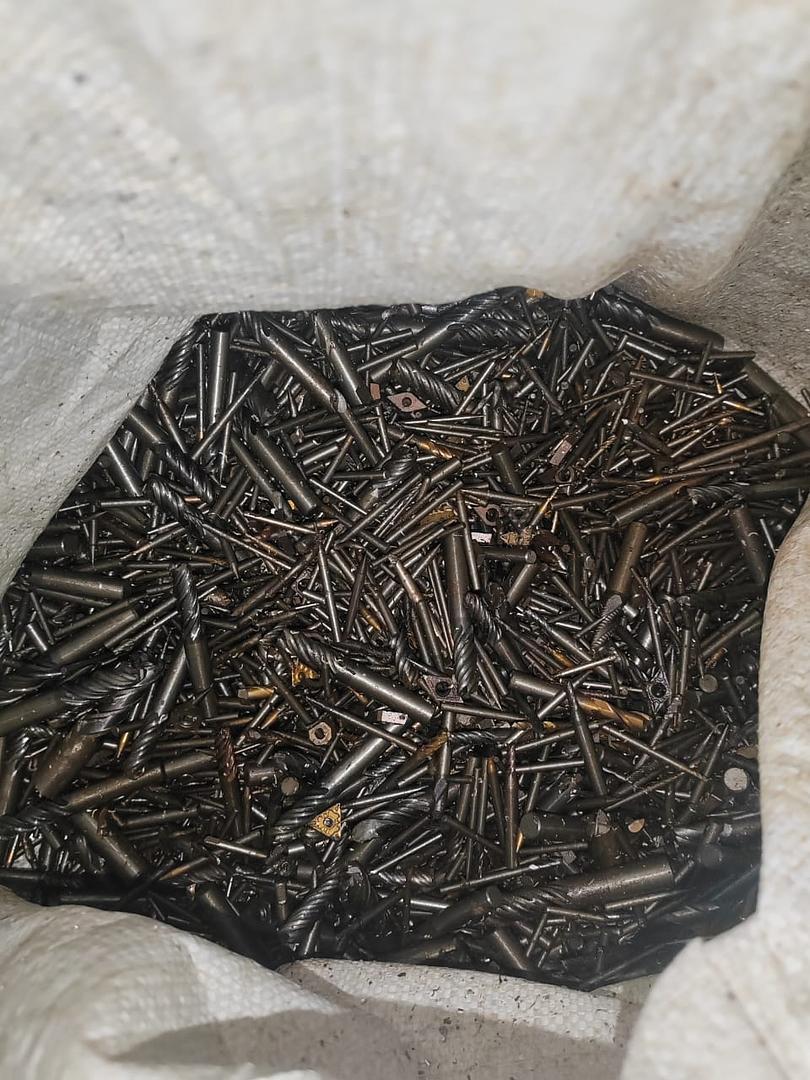
⭐ Why Should Factories Recycle Tungsten Carbide Instead of Throwing It Away?
In the metalworking and CNC machining industry, tungsten carbide is widely used in inserts, end mills, drills, punches, molds, and wear parts. Because it has extremely high hardness and durability, it is also much more expensive than steel.
However, many factories still throw away used carbide tools or sell them as mixed scrap metal—losing a large amount of money every year.
In reality, tungsten carbide is one of the most profitable and environmentally friendly materials to recycle.
Here’s why every factory should start recycling carbide.
💰 1. Tungsten carbide is extremely valuable — throwing it away is losing money
The value of scrap carbide is:
- 20–50 times higher than scrap iron
- 10–20 times higher than stainless steel scrap
Even broken inserts, worn end mills, and chipped drills are worth a lot per kilogram.
Example:
A CNC factory generates 5–20 kg of scrap carbide per month.
If not recycled, the factory may lose thousands to tens of thousands of ringgit per year.
Not recycling = throwing money into the bin.
🌍 2. Recycling reduces environmental impact and supports ESG
Mining tungsten ore is difficult and harmful to the environment:
- High energy consumption
- Heavy land disruption
- Wastewater and chemical pollution
Recycling carbide helps reduce:
- Tungsten mining
- CO₂ emissions
- Industrial waste
More companies worldwide are focusing on ESG and sustainability.
Recycling carbide is one of the easiest ways for factories to meet environmental expectations.
🔧 3. Recycled carbide can be used to produce new cutting tools
Tungsten carbide is one of the few industrial materials that can be 100% recycled.
Through:
- Crushing
- Zinc process or chemical treatment
- Powder purification
- Re-carburation
Recycled WC powder can be reused to make:
- Inserts
- End mills / drills
- Dies and punches
- Wear-resistant parts
The quality can reach 100% of virgin carbide performance.
That means the tools you recycle today may become the new tools you use tomorrow.
🏭 4. Improves factory waste management and 5S
A proper carbide recycling program helps factories:
- Categorize waste
- Reduce unnecessary loss
- Improve 5S standards
- Reduce tooling cost
- Maintain a clean and organized workspace
This also supports certification systems such as:
- ISO 9001 (Quality)
- ISO 14001 (Environmental)
- ISO 45001 (Safety)
Recycling carbide shows the factory operates responsibly and professionally.
🔄 5. Reduces storage clutter and prevents scrap contamination
Many factories face the same problem:
- Used tools pile up everywhere, mixed with normal metal scrap.
This causes:
- Loss of valuable materials
- Lower scrap resale price
- Employees throwing away carbide unknowingly
A recycling program helps you:
- Centralize carbide waste
- Track collection by batch
- Know the exact value of your scrap
- Reduce overall tooling cost (TOC)
🧩 6. Enhances your factory’s image and customer confidence
Many major customers (automotive, electronics, MNCs) now ask:
> “How do you manage your industrial waste?”
“Do you recycle carbide and other high-value materials?”
Having:
- Proper waste sorting
- Carbide recycling documentation
- Environmental policies
Will make your factory stand out and appear more professional.
🏆 Conclusion: Not recycling = waste. Recycling = savings + sustainability + professionalism
Tungsten carbide is a high-value material
and one of the
most profitable, most sustainable, and easiest materials to recycle.
Not recycling means losing money.
Recycling brings financial, operational, and environmental benefits with zero downside.